RingConn Gen 3 vs Gen 2: Should You Upgrade?
RingConn's Gen 3 keeps the brand's core promise โ no subscription, ever โ while adding hardware Gen 2 doesn't have: on-ring vibration alerts and a new vascular health trend insights feature. Gen 2 remains on sale at a lower price, still thinner and lighter, and still the ring most often recommended as a budget-friendly, fee-free entry point. Here's whether the Gen 3 upgrade earns its higher price.
At a glance
Full comparison
| Feature | RingConn Gen 3 โฏ | RingConn Gen 2 โฏ |
|---|---|---|
| Price | From $349 (Future Silver/Royal Gold/Matte Black); $369 (Brushed finishes) | Lower launch price than Gen 3 |
| Subscription | None | None |
| Battery life (ring) | 10โ12 days (vibration on) / 11โ14 days (vibration off) | 10+ days |
| Thickness / weight | 2.3 mm / 2.5โ3.5 g | 2.0 mm / 2โ3 g โ thinner, lighter |
| Vibration alerts | Yes โ on-ring haptic notifications | No |
| Vascular health trend insights | Yes (trend insights over time, not single-point readings) | No |
| Standout feature | Vibration alerts + vascular health trend insights | Built-in sleep apnea monitoring feature |
Round 1: Price & positioning
Gen 3 costs more upfront โ $349 for the Future Silver, Royal Gold, and Matte Black finishes, $369 for the two Brushed finishes โ reflecting its added hardware. Gen 2 remains RingConn's lower-priced entry point into the same no-subscription model.
Neither generation charges a recurring fee โ RingConn's central pitch to Oura-averse shoppers holds across both rings. If budget is the deciding factor, Gen 2 gets you the full RingConn experience for less.
Round 2: What Gen 3 actually adds
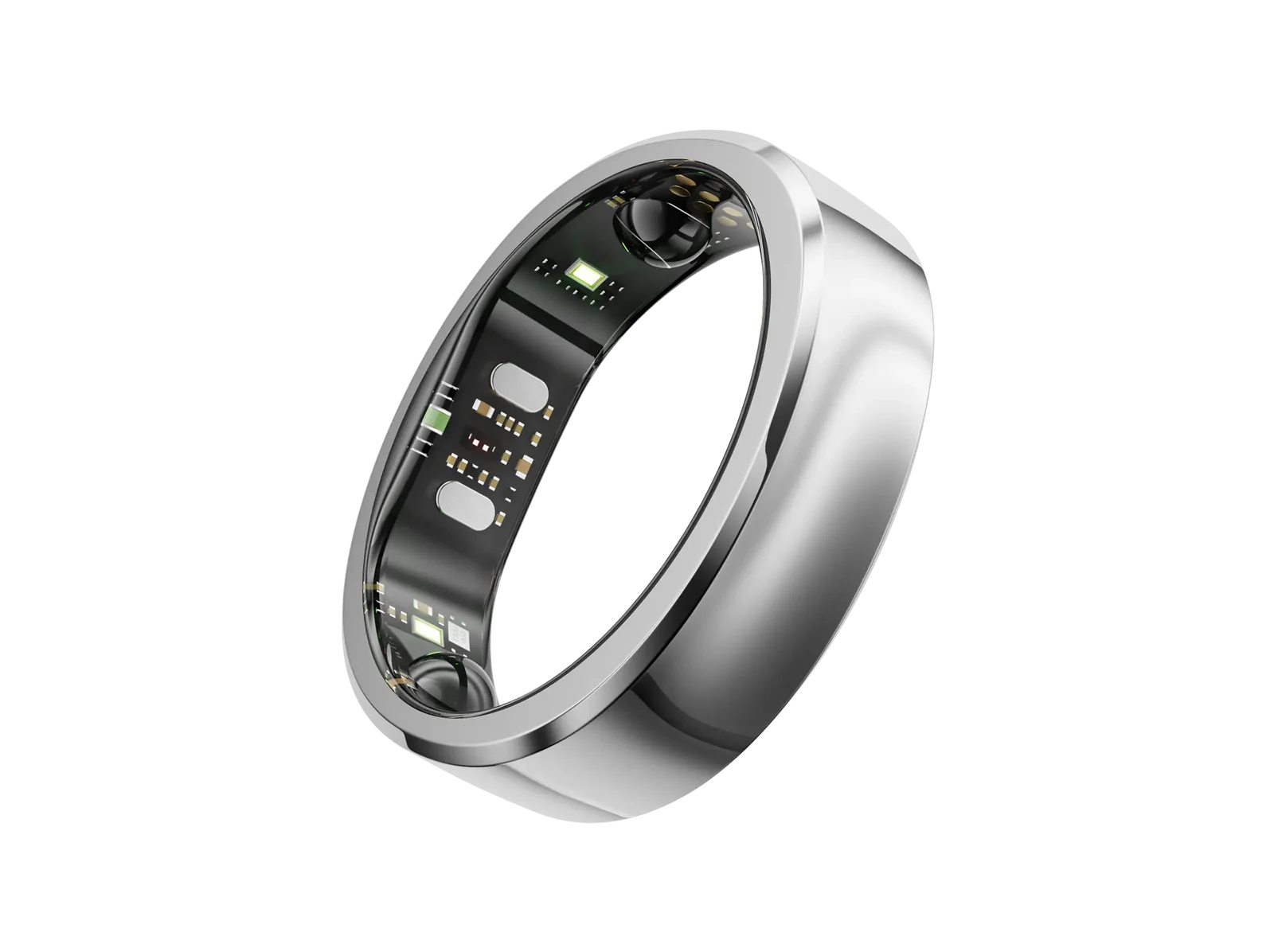
Gen 3's two new arguments are on-ring vibration alerts โ haptic notifications you can feel without checking your phone โ and vascular health trend insights, which RingConn describes as tracking trends over time rather than delivering a single blood-pressure-style reading.
The sensor suite behind this is a PPG optical heart-rate sensor, temperature sensor, 3-axis accelerometer, and the new vibration motor. Battery life holds up well despite the added hardware: 10โ12 days with vibration on, 11โ14 days with it off.
Round 3: Comfort & design
Gen 2 stays thinner (2.0 mm) and lighter (2โ3 g) than Gen 3 (2.3 mm, 2.5โ3.5 g). For wearers who prioritize an unnoticeable ring above all else, Gen 2's edge survives a full generation upgrade.
Gen 3's extra hardware makes it marginally larger โ a predictable trade-off for the vibration motor and expanded sensor suite. Both remain slim by smart-ring standards; the difference is measured in fractions of a millimeter and grams.
Round 4: Who should actually upgrade?
If you already own Gen 2 and are happy with its battery life and sleep apnea monitoring feature, Gen 3's pull comes down to whether on-ring vibration alerts and vascular health trend insights matter enough to justify the price difference.
First-time RingConn buyers who don't need on-ring haptics can save money with Gen 2 while keeping the no-subscription model intact. Buyers who want the newest sensor platform will find Gen 3's extra cost easy to justify.
Cost & subscription
Neither ring requires a subscription โ both are one-time purchases with no recurring fees, RingConn's central differentiator against Oura and Whoop. The only ongoing cost difference is the higher upfront price of Gen 3 ($349โ369) versus Gen 2's lower launch price.
Buy RingConn Gen 3 if: you want the newest sensor platform, on-ring vibration alerts for notifications, and vascular health trend insights, and you don't mind paying more upfront for it.
Buy RingConn Gen 2 if: you want RingConn's no-subscription model at the lowest entry price, prioritize the thinnest, lightest fit, or specifically want its sleep apnea monitoring feature.
โฏ RingConn Gen 3
As an Amazon Associate we earn from qualifying purchases. Some links on this page are affiliate links.
New vibration alerts. Vascular health trend insights.
Check Price โ