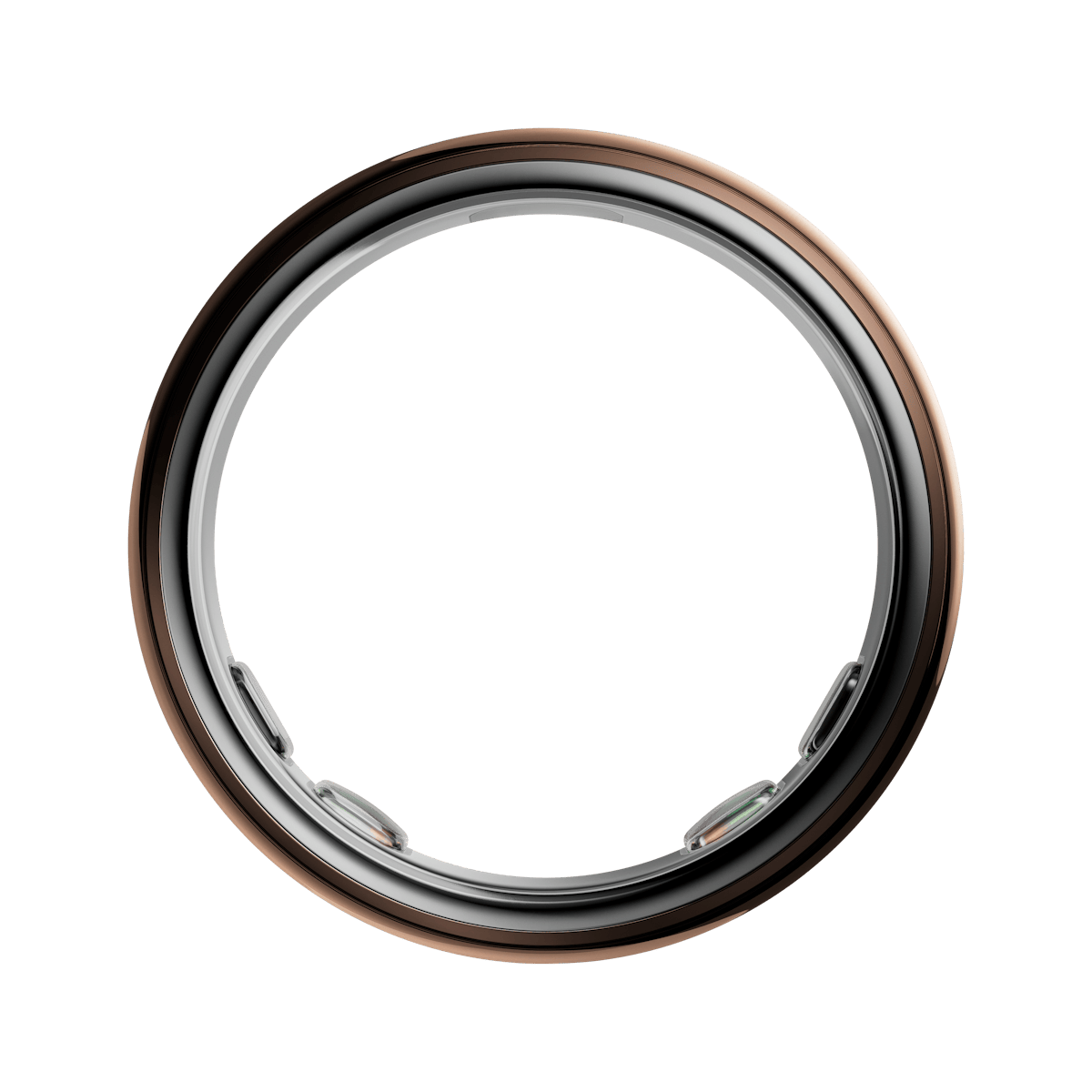
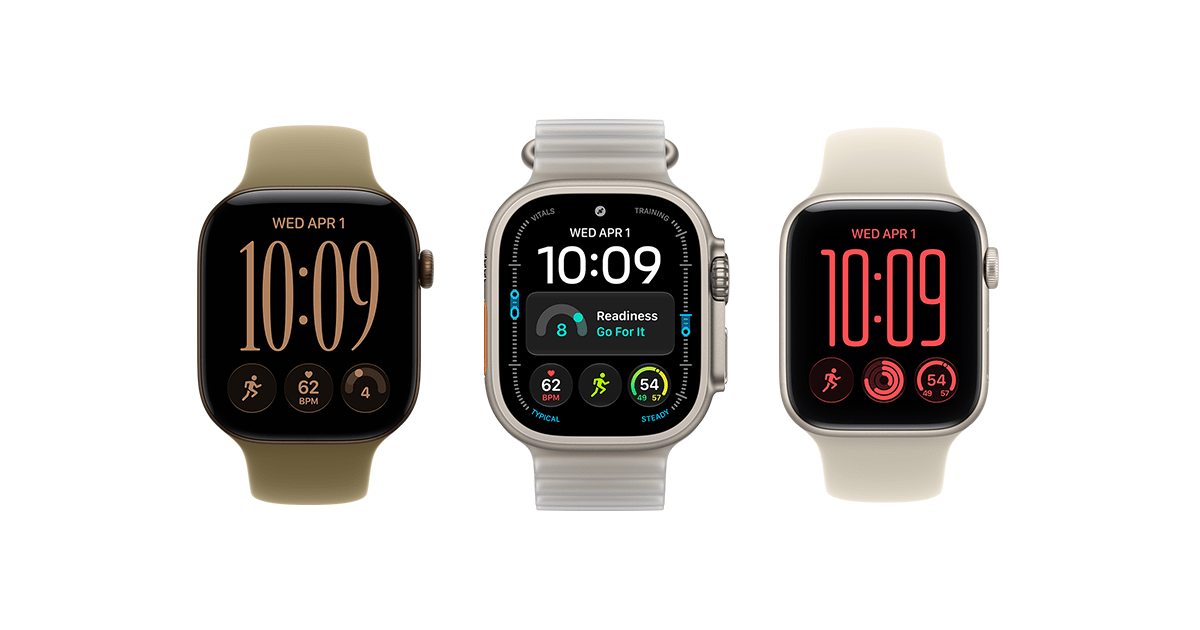
Oura Ring 4 and Apple Watch are not competing products — they serve fundamentally different primary purposes. This comparison breaks down where each excels so you can decide which fits your life, or whether you want both.
Oura Ring 4 is a passive health monitor: it tracks physiological data during sleep and daily life, reporting a detailed morning summary. No screen, no GPS, no interaction required during the day.
Apple Watch is an active smartwatch: it responds to commands, tracks GPS workouts in real time, handles notifications and payments. Its 36-hour battery means it typically charges overnight — missing the sleep data that makes passive monitors most useful.
| Feature | Oura Ring 4 | Apple Watch Ultra 2 |
|---|---|---|
| Sleep tracking | Excellent (7-day battery) | Good (if charged daytime) |
| Battery life | 7 days | 36–60 hours |
| GPS | No | Dual-freq L1+L5 |
| Smartwatch features | None | Full |
| ECG | No | Yes |
| HRV (nightly) | Yes (finger, accurate) | Partial (charging conflict) |
| Subscription | $6/month | None |
| Price | $349 | $799 |
| Cycle tracking | Advanced (Cycle Insights) | Good (wrist temp) |
The 7-day battery eliminates charging conflicts. Oura's finger PPG sensor produces cleaner HRV data during sleep than any wrist sensor. For users whose primary goal is sleep and recovery tracking, the ring wins unambiguously.
For GPS runs, cycling, hiking — Apple Watch Ultra 2's dual-frequency GPS is the most accurate in any consumer wearable. Oura detects workouts passively but provides no real-time guidance or GPS.
Many users keep or add both. Apple Watch on the wrist during the day; Oura Ring on the finger overnight. The devices are complementary — Apple Health syncs data from both into a single platform. If you can only choose one: choose Oura if sleep and recovery is the priority; Apple Watch if you want a do-everything smartwatch.
Oura Ring 4 has a more developed cycle tracking feature set. Its finger-based temperature sensor provides a cleaner signal than the wrist, and the Cycle Insights feature in the Oura app displays nightly temperature deviation across the cycle clearly. The direct integration with Natural Cycles — where Oura exports temperature data automatically — creates the most capable consumer-grade cycle tracking system available.
Apple Watch includes wrist temperature sensing (Series 8 and later) and provides retrospective ovulation estimates in the Health app. Apple Watch also integrates with Natural Cycles via Apple Health. The wrist sensor produces noisier temperature data than Oura's finger sensor, and the overnight charging conflict means temperature data gaps are common for users who charge at night. For continuous, high-quality temperature-based cycle analysis, Oura Ring remains the stronger platform.
Apple Watch Ultra 2 and Series 4+ include an ECG feature — a 30-second single-lead electrocardiogram for detecting atrial fibrillation. This is a meaningful health feature that Oura Ring does not have. Apple Watch also includes a blood oxygen sensor (SpO2) for spot checks. Both sensors are passive screening tools — they don't diagnose, but the irregular rhythm notification has been credited with detecting undiagnosed AFib in multiple documented cases.
Oura Ring does not include ECG or blood oxygen sensors. Its sensor focus is on continuous HRV, temperature, and heart rate for sleep and recovery analysis rather than on-demand cardiac monitoring. For users with a family history of heart arrhythmia or who specifically want AFib screening, Apple Watch's ECG feature is a meaningful differentiator.
| Cost | Oura Ring 4 | Apple Watch Ultra 2 | Apple Watch Series 9 |
|---|---|---|---|
| Upfront | $349 | $799 | $399 |
| Subscription | $72/year | None | None |
| 3-year total | ~$565 | $799 | $399 |
Apple Watch has no subscription — all features are included in the hardware price. Oura Ring requires $6/month ($72/year) for full data access after the first month. Over three years, Oura Ring costs approximately $565 total versus $399 for Apple Watch Series 9 or $799 for Ultra 2. For users considering both devices together, the combined 3-year cost is approximately $965 (Oura + Series 9) to $1,365 (Oura + Ultra 2).